



Third party risk management (TPRM) and supply chain risk management (SCRM) are often used interchangeably, but they are not the same thing. TPRM looks closely at your direct external relationships, while SCRM looks at the entire chain of dependencies that gets a product or service from origin to customer.
What is third-party risk management?
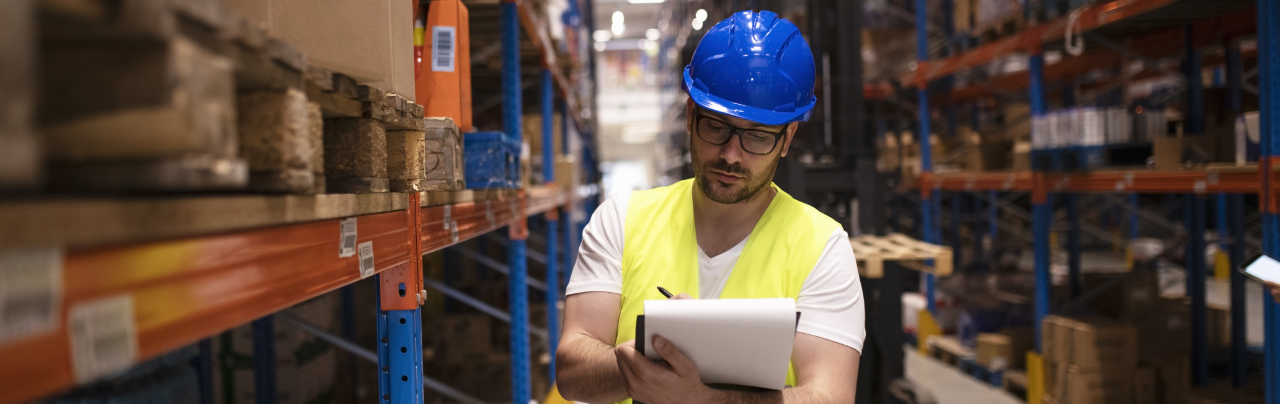
Third-party risk management is the discipline of identifying, assessing, monitoring and mitigating risks that arise from your organisation’s relationships with external vendors and business partners. “Third party” here means any outside organisation that processes your data, delivers services or supports your operations – from cloud providers and IT outsourcers to facilities managers, marketing agencies and consulting firms.
A mature TPRM programme typically includes:
- A complete inventory of all third parties and the services or products they provide.
- Risk-based due diligence at onboarding, covering areas like information security, compliance, financial health, ESG practices and operational resilience.
- Ongoing monitoring through questionnaires, certifications, audits, performance data and adverse-media checks.
- Contractual controls: SLAs, security clauses, right-to-audit, incident reporting and exit provisions.
In essence, TPRM asks: “For each external organisation we rely on directly, how much risk are we taking on – and is it acceptable?”
What is supply chain risk management?
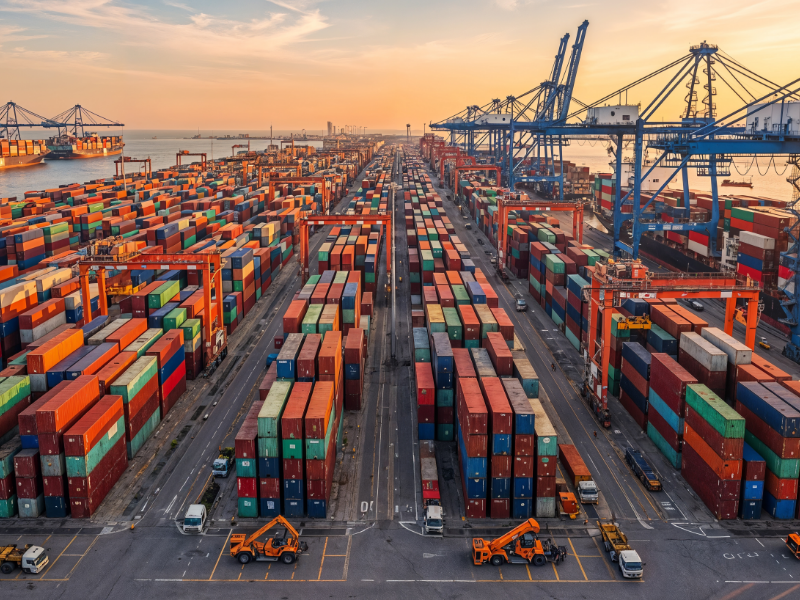
Supply chain risk management is the implementation of strategies to manage everyday and exceptional risks along the entire supply chain, with the objective of reducing vulnerability and ensuring continuity. It looks at the extended network of logistics and supply chain management—from raw materials and components through manufacturing, logistics, distribution and sometimes even end-of-life or reverse logistics.
Effective SCRM focuses on:
- Mapping upstream and downstream dependencies, including sub-suppliers and logistics routes.
- Risk identification of issues like geopolitical shocks, natural disasters, pandemics, quality issues, cyberattacks, regulatory changes and ESG non-compliance that can disrupt supply.
- Building risk mitigation strategies: dual sourcing, safety stocks, near-shoring, supplier diversification, business continuity plans and scenario-based stress tests.
So while TPRM might focus on whether your logistics provider meets your security and compliance standards, SCRM asks a bigger question: “What could disrupt the flow of goods and services across the whole chain, and how do we stay resilient?”
Scope and depth: how they differ
The key difference between TPRM and SCRM is scope.
- TPRM typically concentrates on the first layer – the third parties you contract with directly. It asks whether each of those relationships is acceptable from a risk perspective.
- SCRM encompasses the entire supply chain – including multiple tiers of suppliers and the interplay between them. It asks how risks propagate across that network and how supply chain solutions can be implemented to prevent a local issue from becoming a systemic disruption.
A company can have strong TPRM – tight contracts and controls with its direct vendors – and still be highly vulnerable if a tier-2 or tier-3 supplier fails or if a geopolitical shock hits a key raw material region. Conversely, a strong SCRM programme depends on robust TPRM as its foundation, because direct vendor weaknesses are often the first points of failure in the chain.
Risk types: overlapping but not identical
Both TPRM and SCRM deal with overlapping risk categories, but they emphasise them differently.
TPRM tends to focus on:
- Cybersecurity risks and data privacy risks from IT vendors, SaaS providers and processors.
- Compliance and regulatory risks (e.g., data protection laws, financial regulations, sector-specific norms).
- Financial and operational health of vendors, including concentration risk where a single third party is critical to operations.
- Reputational and ESG risks associated with partners’ behaviour (e.g., labour practices, corruption, environmental violations).
SCRM broadens the lens to include:
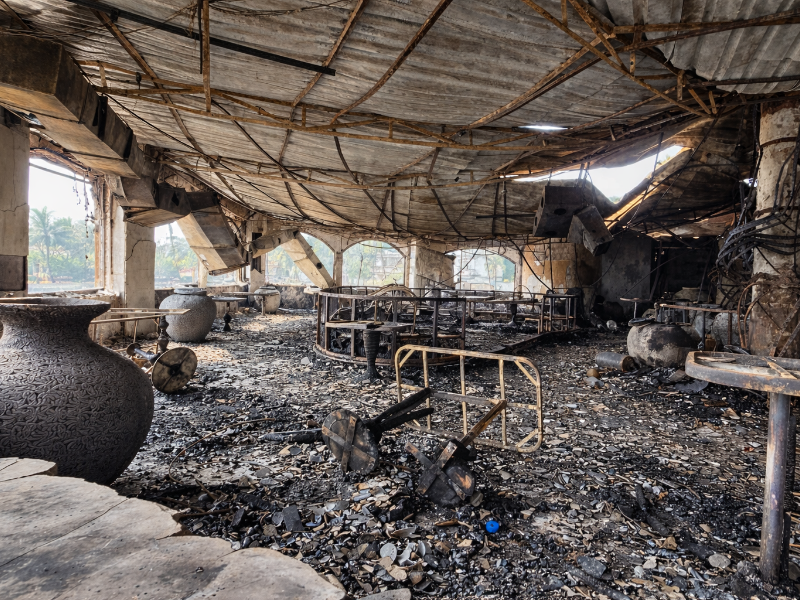
- Physical disruptions: natural disasters, pandemics, port closures, transport bottlenecks and infrastructure failures.
- Geopolitical and trade risks: sanctions, tariffs, export controls, political instability and conflicts affecting supplier regions.
- Quality and safety issues: defects, contamination, non-compliance with standards that can trigger recalls or regulatory intervention.
- Systemic ESG risks: deforestation, human rights abuses, or high emissions embedded deep in the supply chain that can impact brand and license to operate.
In short, TPRM is relationship-centric; SCRM is flow-centric.
When TPRM and SCRM collide: examples
- A cloud outage at your main hosting provider is primarily a TPRM problem, but if it impacts your ability to route orders to factories or track shipments, it becomes a supply chain continuity issue too.
- A political crisis in a key sourcing country is primarily a supply chain risk, but it will quickly expose weaknesses in TPRM if you have not diversified vendors, assessed contingency plans or embedded relocation clauses in contracts.
- A forced-labour scandal at a tier-3 supplier creates reputational and regulatory risk; if your TPRM process only looked at the tier-1 assembler, your SCRM programme has a visibility problem.
These scenarios show that treating TPRM and SCRM in silos leaves dangerous blind spots.
Integrating TPRM and SCRM: a practical approach
Leading organisations increasingly view TPRM as a critical component of a broader SCRM strategy. A practical integration approach includes:
- Unified mapping of relationships and flows
Build a single view that maps:- All third parties (for TPRM)
- Their role in your supply chain (for SCRM)
- Their upstream dependencies where possible (tier-2, tier-3 visibility).
- Shared governance and ownership
Establish a cross-functional governance risk-free structure that brings together procurement, risk, cybersecurity, operations, legal and sustainability.
This group sets common risk criteria, criticality tiers, and reporting standards for both vendor and supply chain risk. - Aligned risk assessment frameworks
Use a single risk taxonomy and rating scale across TPRM and SCRM so that cyber, operational risk, financial and ESG risks are assessed consistently.
For critical suppliers, combine TPRM-style due diligence (controls, compliance, security posture) with SCRM-style stress tests (geography, capacity, single-point-of-failure analysis). - Integrated monitoring and early warning
Connect continuous monitoring tools (for cyber, financial health, sanctions, ESG controversies) with supply chain visibility tools (for lead times, stock levels, logistics bottlenecks).
Set up thresholds that trigger both vendor-level interventions and supply-chain contingency plans. - Resilience-first strategy
Design your overall strategy around resilience, not just cost. That means:- Diversifying critical suppliers and locations.
- Building redundancy through implementation of enterprise risk management frameworks to identify single-points-of-failure.
- Embedding contractual rights and technical capabilities to switch or scale vendors when disruptions hit.
How to position this for boards and CXOs
For boards and CXOs, the message is straightforward:
- TPRM protects the organisation from the risks of individual external relationships.
- SCRM protects the organisation from disruptions and vulnerabilities across the whole value chain.
You can have excellent TPRM and still be brought down by a systemic supply chain failure; equally, you can invest in supply chain mapping and still be breached via a poorly managed SaaS vendor. True risk resilience demands board leadership that recognizes both disciplines and integrates them into a single view of third-party and supply chain risk.
Framed this way, TPRM vs SCRM is not a choice. It is a sequence and a layering: get TPRM right for your direct relationships, then extend that discipline upstream and across the network through SCRM. In an interconnected world, your real risk posture is defined not just by who you work with, but by who they work with – and how prepared you are when something breaks anywhere along that chain.