

Introduction
Walking, the most elemental form of human mobility, serves as the foundation of any truly accessible city. Safe, uninterrupted, and thoughtfully designed footpaths and sidewalks are not mere aesthetic additions; they are a key metric for measuring urban liveability. A wide, continuous sidewalk signals to the ordinary commuter: we care for you. When sidewalks vanish or become blocked, the message is clear: your safety comes second.
Data consistently shows that a substantial majority of work-related journeys across Indian cities are relatively short, often less than five kilometers. Logically, these short distances should be effortlessly covered on foot. Yet, the poor state of pedestrian infrastructure—broken pavements, encroachment, inadequate lighting, and inconsistent surfaces—creates a pervasive deterrent, compelling residents to rely on motorized transport even for the briefest of errands.
This failure to prioritize the pedestrian not only diminishes the quality of urban life but introduces a host of cascading risks that jeopardize social, economic, and environmental resilience. This article employs a risk management lens to analyze the current crisis of walkability in Indian cities and proposes actionable, risk-intelligent strategies for risk mitigation in order to reclaim the sidewalk.
Why Indian Cities Aren’t Walkable
The dominance of motorised vehicles in Indian cities introduces a host of intertwined urban risks. As two-wheelers, cars and ride-hails proliferate, we see traffic congestion, pollution, road-rage episodes, and a heightened accident rate. Sidewalks often become the residual space — narrow, fragmented, and vulnerable to encroachments.
- Traffic Congestion: The fundamental shift from walking to driving for short trips significantly increases the volume of traffic. This leads to debilitating congestion, resulting in loss of work-hours, inflated logistics costs, traffic risk and a drag on urban economic productivity.
- Pollution: Environmental risks such as increased vehicular emissions directly contribute to severe air and noise pollution, raising the risk profile for health risks such as respiratory diseases, cardiovascular issues, and diminished overall public health. Furthermore, the lack of walkable spaces discourages physical activity, exacerbating health concerns associated with sedentary lifestyles, such as obesity and diabetes.
- Design flaws: One of the fundamental reasons Indian cities are difficult to walk in lies in how they are designed. Sidewalks often begin and end abruptly, forcing pedestrians to step onto moving carriageways. There is rarely a continuous network that connects key destinations such as schools, metro stations or markets. Street edges are either walled off, encroached upon or used for parking. As a result, pedestrians are squeezed into narrow, uneven strips. Many junctions are built to favour fast vehicle turning movements, leaving little refuge space or safe crossings for people on foot. Zebra crossings, tactile paving, and kerb ramps are often missing or poorly maintained thereby posing infrastructure risks. Furthermore, Indian streets showcase an absence of universal design. Persons with disabilities, senior citizens, and parents with strollers are largely excluded from the pedestrian paths due to level differences, obstructions, or poor surfacing. Resilient urban systems depend on sustainable infrastructure that serves all users equitably, not just those behind the wheel.
- Poor maintenance: Poorly maintained or non-existent footpaths disproportionately affect vulnerable populations—the elderly, children, and persons with disabilities. This creates a severe barrier to access and mobility, fundamentally compromising the city’s road safety and social contract, and deepening urban inequality. The lack of safe passage is, at its core, an issue of spatial injustice.
- Road Rage and Fatalities: When pedestrians are forced to share space with fast-moving vehicles due to unusable sidewalks, safety risks arising from accidents, injuries, and fatalities spike dramatically. The ensuing stress and competition for limited road space also elevate the incidence of aggressive driving and road rage, further eroding urban civic harmony.
The Cost of Neglecting Pedestrian Infrastructure
- Human cost: Pedestrian fatalities and injuries continue to mount. The absence of usable footpaths forces people into carriageways or unsafe crossings thus affecting pedestrian safety.
- Economic cost: Walkable streets are intrinsically linked to vibrant local economies. When streetscapes are hostile to pedestrians, footfall for local shops and street vendors decreases, stifling micro-economic activity and weakening the social fabric of neighborhoods. The cost is the loss of a dynamic, street-level economy.
- Public-health cost: Lack of walking-friendly environments suppresses incidental physical activity, contributing to sedentary lifestyles and associated non-communicable diseases. When walking is unattractive or unsafe, more trips are made by vehicle or informal transport, adding to pollution that is detrimental to health.
- Urban resilience cost: Walkability is central to resilient urban design. Cities that prioritise motorised mobility risk locking in unsustainable transport systems, making them more vulnerable to shocks like fuel price spikes and climate change impacts.
- Affordability cost: If walking is unsafe, affordable housing that is farther from workplaces becomes less viable, generating longer commutes and placing stress on public transport and infrastructure — adding hidden costs to city-living.
- Reputation cost: A city that fails to provide basic, safe infrastructure for its citizens faces reputational risk as it signals a critical weakness in governance and planning. This negatively impacts the city’s brand, deterring talented professionals and foreign investment, as liveability is increasingly weighted in location decisions.
Risk-Intelligent Solutions to Make Indian Cities Walkable
Equitable Distribution of Road Space
One of the fundamental errors in urban planning has been the assumption that street capacity must expand primarily for vehicles. A risk-intelligent counter-strategy is to reallocate road-space — ensuring sidewalks, cycle tracks and public-realm amenities receive more than token space.
Designing Streets That Cater to Everyone
- Individual streets cannot be addressed in isolation. A risk-intelligent approach necessitates the development of a complete, connected network where walkability is seamless across the city. This means ensuring that footpaths connect major transit hubs, commercial centers, residential areas, and public services without hazardous breaks or dead ends. A case study in Nagpur found that while one redesigned street ranked high for walkability and cycle-friendliness, adjacent streets lagged significantly — illustrating how walkability efforts must extend beyond flagship stretches.
- Rather than undertaking the redevelopment of every footpath, most existing footpaths can be repaired and retrofitted. The focus should be on the ‘edge’ of the carriageway, the neglected margin where the footpath lies, as the main carriageways are typically maintained. Repairing and upgrading these edges is feasible, cost-effective and immediate. This targeted, focused investment will drastically reduce the financial risk and logistical risk of large-scale projects while yielding quick, visible results.
Strategic focus on walking infrastructure
- Authorities must prioritise wider footpaths, obstacle-free surfaces, shade provision, lighting and safe crossing points.
- A poorly maintained sidewalk quickly reverts to unusability. Maintenance regimes must be regularly conducted to maintain the new condition of roads.
- Data-driven risk assessment must be incorporated in planning: high-pedestrian corridors must be mapped, pedestrian-vehicle conflict zones should be analysed, and priority must be assigned based on exposure and vulnerability (elderly, children, disabled).
Institutional Initiatives & Pilot Programs
As the World Economic Forum’s 2025 report on urban resilience and global stability observes, cities that institutionalise inclusive urban design — supported by strong public participation and transparent governance — are better equipped to withstand systemic shocks. The visibility of well-designed, pedestrian-friendly streets acts as a public demonstration of good governance.
Institutional initiatives require cities to measure walkability indices, conduct public consultations, and co-design interventions with local communities. This process helps identify specific problems — unsafe crossings, encroached sidewalks, or accident black spots — allowing municipalities to target limited resources more effectively. Pilot programs allow cities to experiment, collect evidence, and demonstrate measurable benefits before scaling up. When pilots succeed, they help secure political and financial buy-in for larger transformations.
In India, the Streets4People initiative of the Ministry of Housing & Urban Affairs (MHUA), under the Smart Cities Mission, claims to have transformed around 50 streets across India with pedestrian-friendly interventions. This shows that systemic change is possible — and that risk-intelligent street design is not just theoretical.
Global Blueprints for Transformation of Pedestrian Infrastructure
- New York City, United States – Car-oriented streets are being transformed into pedestrian spaces; e.g., widening sidewalks, adding seating, reallocating vehicle lanes, thereby reducing traffic speeds and enhancing foot traffic in commercial zones.
- Barcelona, Spain: Barcelona’s renowned “Superblock” model involves reorganizing groups of nine city blocks into units where through-traffic is redirected to the perimeter. The interior streets are reclaimed for pedestrians, play, and community interaction, ensuring that essential services are within a walkable radius. This radically reduces traffic-related risks, enhances air quality, and promotes community interactions.
- Paris, France: Paris is aggressively pursuing the concept of the “15-Minute City,” where residents can reach most of their key destinations (work, school, shopping, leisure) via a 15-minute walk or bike ride. A long-term policy emphasis on walking and cycling has reshaped neighbourhoods, prioritized the public realm, and banned or limited cars in central zones.
These international precedents illustrate that rethinking rethinking road-space and prioritising pedestrians is both feasible and effective. The key: cities treat walking as a central urban mobility strategy, not a secondary outcome.
Putting Policy into Practice
To turn vision into action, the following shifts are essential:
- Current urban policies often perversely subsidize the development and maintenance of sprawling, car-dependent suburbs, eroding walkability. A shift is required so that investments favour non-motorised transport, pedestrian zones, and localised mixed-use development. This means regulatory changes that make it easier and more financially attractive to build the types of urban spaces that inherently support walking and public transit.
- Expecting citizens to abandon car ownership without a viable, safe alternative is unrealistic. Strategic investment must flow into enhancing the public realm—parks, squares, and, crucially, sidewalks. Quality walking infrastructure offers a life-style shift, not simply a mobility mode.
- Building on green fields is mechanically simple; the true challenge—lies in re-designing existing areas. This involves land-use reform, pedestrian crossing upgrades, encroachment removal and extensive public-realm redesign. This difficult work is where risk management thinking truly adds value.
- Every street and neighbourhood possesses a unique context and will have different patterns of pedestrian use and blockages. Effective implementation of risk strategies requires constant engagement with community groups and civil society on design and maintenance.
Conclusion – Vision for the Future
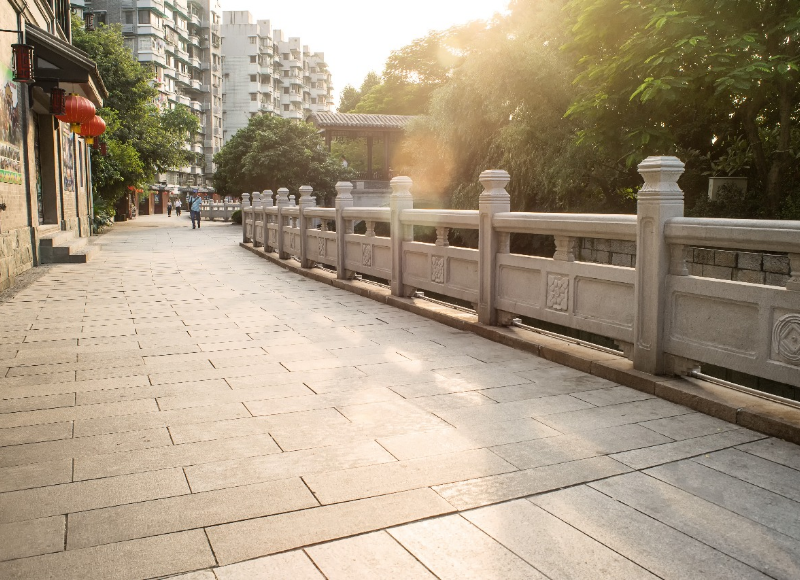
Imagine an Indian city where every resident, from child to senior, can step out of their home and walk safely to transit stops, markets, schools and parks — where sidewalks are continuous, shaded, unobstructed, comfortable and inviting. Where vehicles no longer dominate the roadway edge and footpaths become vibrant public spaces. Where walking is not a risk-laden choice but a natural, attractive option.
Cities that succeed in this transformation will reap dividends: fewer accidents, lower vehicular dependence, healthier populations, more inclusive mobility and greater overall resilience. Reclaiming the sidewalk is not just about pavement-work – it is a genuine reflection of a civic commitment to human flourishing.
With the right risk-intelligent approach, Indian cities can make walking visible, valued and viable.
FAQS
1.Why is it so difficult to walk in Indian cities?
It is difficult to walk in Indian cities due to the following factors –
- The fundamental shift from walking to driving for short trips significantly increases the volume of traffic. This leads to debilitating congestion.
- Environmental risks such as increased vehicular emissions directly contribute to severe air and noise pollution, leading to diminished overall public health. The lack of walkable spaces discourages physical activity, exacerbating concerns such as obesity and diabetes.
- One of the fundamental reasons Indian cities are difficult to walk in lies in how they are designed. Sidewalks often begin and end abruptly. There is rarely a continuous network that connects key destinations. Street edges are either walled off, encroached upon or used for parking. As a result, pedestrians are squeezed into narrow, uneven strips.
- Poorly maintained or non-existent footpaths disproportionately affect the elderly, children, and persons with disabilities. This creates a severe barrier to access and mobility.
- When pedestrians are forced to share space with fast-moving vehicles due to unusable sidewalks, safety risks such as accidents, injuries, and fatalities spike dramatically.
2. How does poor pedestrian infrastructure increase urban risk?
Poor pedestrian infrastructure increases the following urban risks –
- The absence of usable footpaths forces people into carriageways or unsafe crossings thus affecting pedestrian safety.
- When walking is unattractive or unsafe, more trips are made by vehicle or informal transport, adding to congestion, pollution and travel-time costs. As a result, households bear higher transport expenditures.
- When streetscapes are hostile to pedestrians, footfall for local shops and street vendors decreases, stifling micro-economic activity.
- Lack of walking-friendly environments suppresses incidental physical activity, contributing to sedentary lifestyles and associated non-communicable diseases.
- Cities that do not prioritise pedestrian infrastructure risk locking in unsustainable transport systems, making them more vulnerable to shocks like fuel price spikes.
3. Why is pedestrian infrastructure important?
- Walking, the most elemental form of human mobility, serves as the foundation of any truly accessible city. Safe, uninterrupted, and thoughtfully designed pedestrian infrastructure such as footpaths and sidewalks are not mere aesthetic additions; they are a key metric for measuring urban liveability.
- A wide, continuous sidewalk signals to the ordinary commuter: we care for you. When sidewalks vanish or become blocked, the message is clear: your safety comes second.
- Cities that have good pedestrian infrastructure see fewer accidents, lower vehicular dependence, healthier populations, more inclusive mobility and greater overall resilience.
- The failure to prioritize the pedestrian not only diminishes the quality of urban life but introduces a host of cascading risks that jeopardize social, economic, and environmental resilience.
- With the right risk-intelligent approach, Indian cities can make walking visible, valued and viable.