

When the Curtain Nearly Fell: A Risk Perspective on Cultural Revival
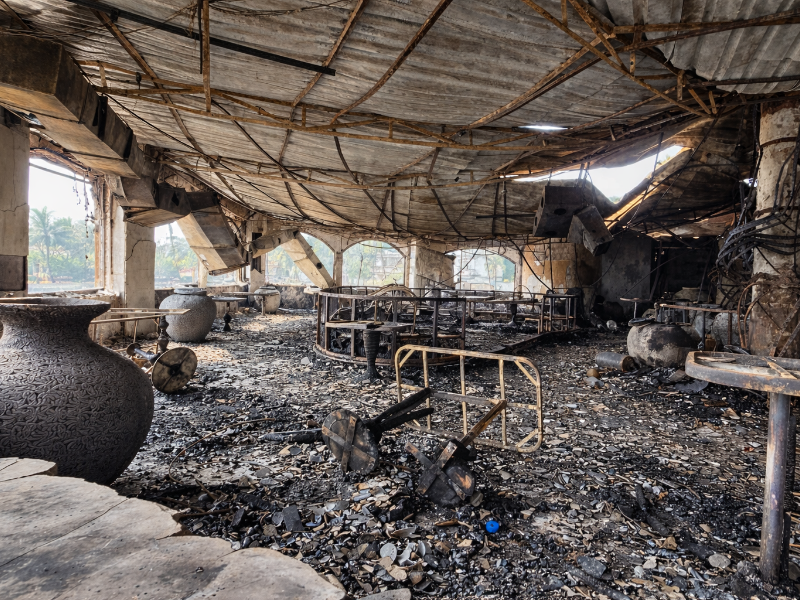
There was a time, not very long ago, when the applause stopped. The footlights dimmed, the stage went dark, and hundreds of thousands of theatre artists across India were left staring into an uncertain void. The pandemic shuttered auditoriums nationwide, but the crisis had been building well before a single lockdown was announced. The rise of over-the-top (OTT) streaming platforms — now commanding hundreds of millions of users in India — had already begun redirecting the nation’s entertainment appetite away from the live stage and towards the personal screen. Research confirms that audiences, particularly younger demographics, increasingly prefer the convenience, affordability, and on-demand accessibility of digital platforms to the ritual of attending a live performance. In this new attention economy, the theatre artist — the actor, the sarangi player, the set designer, the lighting technician — became an endangered professional, trapped in a sector with no safety net, no structured insurance, and no clear institutional champion.
The human toll was devastating. Veteran musicians and theatre practitioners who once earned a stable monthly income suddenly found themselves unable to pay basic expenses, contemplating leaving the arts altogether. In several cities, hundreds of theatre artists faced extreme penury, some struggling even to access basic welfare entitlements. Across the country, performers who had dedicated their lives to the stage took up marketing jobs or coaching classes to survive. Senior artists publicly lamented that the system had abandoned them, with even national and state awardees unable to secure modest financial support. In parallel, theatre producers in major metros operated on shoestring budgets and unpredictable cash flows, often earning less than an entry-level corporate salary because the sector lacked formal salary structures, long-term contracts, or institutional funding. The performing arts sector, despite being a cornerstone of India’s civilisational identity, was being eroded by a convergence of digital disruption, pandemic shock, chronic underfunding, and infrastructural neglect.
This is not merely an arts story. Viewed through a risk lens, the near-collapse of India’s performing arts ecosystem represents a multi-dimensional failure — strategic risk (the absence of a long-term cultural resilience policy), operational risk (the total dependency on live footfall with zero revenue diversification), reputational risk (the erosion of India’s cultural soft power), and human capital risk (the irreversible loss of master artisans and their intergenerational knowledge). When a veteran theatre artist with thousands of performances to their name cannot feed their family, the system has not merely failed — it has broken.
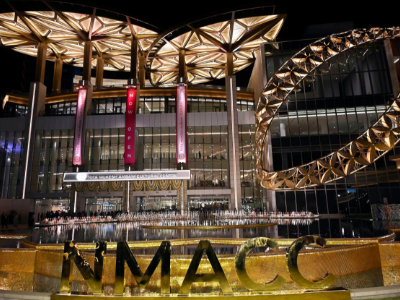
It is against this backdrop of systemic vulnerability that the Nita Mukesh Ambani Cultural Centre (NMACC) has emerged as a transformative force — not just as a venue, but as a risk mitigation architecture for an entire sector on the brink.
The Theatre Infrastructure Deficit: India’s Foundational Risk
Before examining what NMACC is doing right, it is essential to understand the foundational theatre industry risks it is addressing. India has a large film-going population but a relatively low screen density compared to other major markets, and the deficit in dedicated performing arts venues is even more severe. Veteran artists and policymakers have repeatedly highlighted that India simply does not have adequate purpose-built infrastructure for performing arts. Even in major cities, many auditoriums are financially inaccessible for smaller theatre groups.
This is not an inconvenience; it is a structural risk that throttles economic output, cultural innovation, and the livelihood of millions. Without appropriate venues, productions cannot scale, ticket revenues remain constrained, and artists lack the professional environment necessary to refine their craft. Comparative work on the performing arts economy shows that rural and semi-urban regions, despite their rich folk theatre traditions, generate far less economic value simply because they lack the physical and financial infrastructure to stage performances regularly, market them effectively, and attract paying audiences.
In risk terms, India’s performing arts infrastructure gap translates into:
– Capacity risk: too few high-quality venues to host the volume and diversity of productions demanded by a young, culturally curious population.
– Quality risk: technical limitations that prevent global-standard productions from touring India.
– Access risk: geographic and price barriers that exclude large sections of the population from live arts experiences.
Against this backdrop, NMACC’s emergence is not just welcome — it is strategically significant.
NMACC: Building a Risk-Resilient Cultural Ecosystem
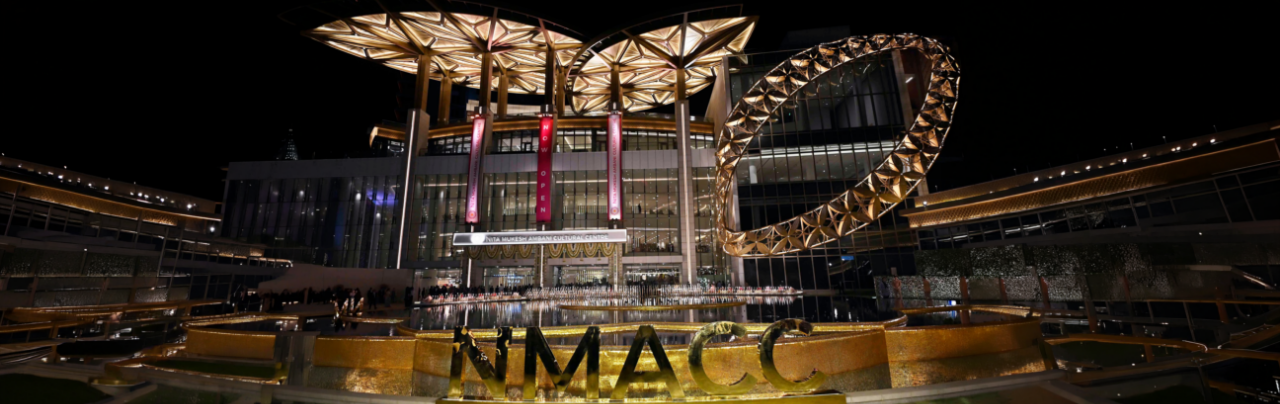
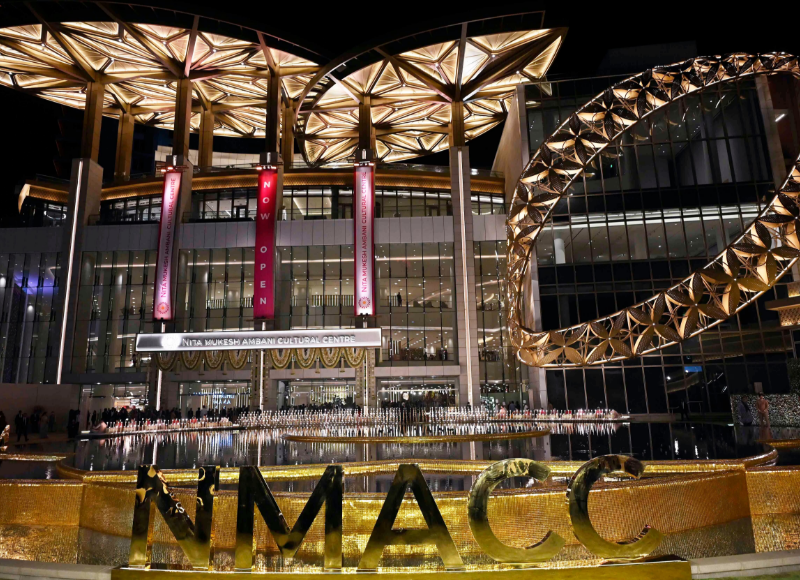
Opened in March 2023 and located within the Jio World Centre in Mumbai’s Bandra Kurla Complex, the Nita Mukesh Ambani Cultural Centre was conceived by Nita Ambani with a clear mission: to preserve and promote Indian arts while bringing the best of global culture to Indian audiences. It is India’s first truly multi-disciplinary cultural centre designed at a global scale. But its significance extends far beyond its physical grandeur. NMACC represents a systematic attempt to de-risk the performing arts value chain at every critical node — infrastructure, talent, programming, audience development, and cultural preservation.
World-Class Infrastructure: Eliminating the Technical Risk
NMACC’s facility design directly addresses India’s infrastructure deficit. The centre houses three performing arts spaces — the 2,000-seat Grand Theatre, the 250-seat Studio Theatre, and the 125-seat Cube — alongside a dedicated multi-level Art House for exhibitions. The Grand Theatre features cutting-edge acoustics and stage technology, including immersive sound, advanced lighting systems, and sophisticated backstage and rigging capabilities. It has been positioned as one of the most technically advanced theatres in the country.
The Studio Theatre is designed as a flexible black-box space for intimate performances, new writing, and mid-scale productions, with high-end technical facilities and experimental staging possibilities. The Cube, with its intimate 125-seat capacity and configurable stage and seating layouts, functions as a laboratory for experimental work, stand-up, storytelling, and cross-genre collaborations. Together, these three spaces form a tiered ecosystem: large-format productions in the Grand Theatre, emerging and mid-scale work in the Studio, and incubation and experimentation in the Cube.
This is not mere luxury — it is risk elimination:
– It removes technical barriers that previously made world-class productions unviable in India.
– It gives Indian creators access to professional-grade infrastructure that allows them to elevate the quality of their work.
– It enables a diversified programming mix across scales and genres, reducing reliance on any single format or audience segment.
Programming Resilience: The Dual Strategy
NMACC’s programming strategy reveals a sophisticated dual approach to resilience — combining high-profile international productions that build credibility and audiences with deep investments in Indian and regional theatre that sustain the domestic ecosystem.
On the international front, NMACC has, in a short span of time, hosted or announced Indian runs of iconic global musicals and plays — from classic family favourites to contemporary blockbusters. These projects bring in large, diverse audiences, set new benchmarks for production quality, and firmly place Mumbai on the global theatre map.
But NMACC’s risk resilience strategy does not rest on imported spectacle alone. The centre opened with “The Great Indian Musical: Civilisation to Nation”, an ambitious original production directed by Feroz Abbas Khan that celebrates India’s journey through dance, drama, and music. Its programming slate has included multilingual and regional offerings — including Marathi theatre led by stalwarts like Prashant Damle — as well as contemporary Indian productions across genres.
By platforming regional language theatre alongside Broadway-style productions in the same prestigious venue, NMACC creates a powerful halo effect:
– The prestige of the venue elevates the perceived value of Indian and regional theatre.
– Audiences attracted by international shows are exposed to Indian work they might otherwise ignore.
– Artists working in Indian languages gain access to world-class infrastructure, expanding their creative and commercial possibilities.
From a risk perspective, this dual programming strategy reduces risks in cultural institutions and diversifies:
– Revenue streams (premium global shows plus locally created productions).
– Audience segments (global-content-seeking urban consumers plus regional and culturally rooted audiences).
– Artistic formats (musicals, plays, dance, stand-up, spoken word, multidisciplinary work).
Talent Pipeline: De-Risking the Human Capital Crisis
Perhaps the most critical risk facing India’s performing arts sector is the irreversible loss of talent. When seasoned artists abandon the stage for survival jobs, their accumulated craft — decades of embodied knowledge — vanishes from the ecosystem permanently. This is not a loss that can be reversed by funding alone; it requires sustained institutional support for careers, not just sporadic patronage for shows.
NMACC addresses this through its focus on community and capacity-building. The centre hosts workshops, masterclasses, and conversations with leading practitioners, offering younger artists access to mentorship, networks, and professional insight. Its intimate spaces — especially the Cube — are deliberately positioned as platforms for new voices, experimental work, and boundary-pushing formats.
This tiered approach mirrors a portfolio risk strategy:
– The Grand Theatre backs large, relatively lower-risk productions with proven appeal.
– The Studio Theatre supports mid-risk, innovative work that has some traction but still needs scale.
– The Cube incubates high-risk, high-innovation ideas and emerging talent.
Not every experiment at the Cube will translate into a commercial hit, but the system is designed so that the overall ecosystem grows richer, more diverse, and more resilient. Over time, this mitigates the human capital risk by:
– Creating more entry points for new artists.
– Normalising experimentation and failure within a supportive institutional context.
– Offering career pathways that can sustain artists over the long term.
A Risk Framework for Cultural Resilience
Viewed through an enterprise risk management lens, NMACC’s contribution can be mapped across five critical risk dimensions.
1. Strategic Risk Mitigation
Strategically, NMACC addresses the risk of India being bypassed in the global performing arts economy. By creating a world-class performing arts venue in Mumbai, it:
– Positions India as a credible stop on international touring circuits.
– Attracts cultural tourism in India and associated economic activity.
– Signals to investors, producers, and policymakers that large-scale performing arts infrastructure is viable in India.
This reduces the long-term risk of cultural marginalisation in the global creative economy and strengthens India’s cultural soft power.
2. Operational Risk Reduction
Operationally, NMACC’s design mitigates multiple historical pain points:
– Technical risk: high-quality acoustics, lighting, rigging, and backstage facilities reduce production failures, delays, and compromises.
– Scheduling risk: multiple venues within the same complex allow for parallel programming and better utilisation.
– Experience risk: superior audience amenities (comfort, visibility, sound quality, accessibility) improve satisfaction and repeat attendance.
A technically robust, professionally managed venue reduces uncertainty for producers and artists, making it easier to plan, invest, and scale.
3. Financial Risk Diversification
Financially, the centre’s model helps de-risk the economics of live performance:
– A membership and patronage ecosystem (such as “Friends of NMACC”-type programmes) creates recurring revenue and philanthropic backing.
– A mix of big-ticket international productions and smaller domestic shows spreads financial risk across different price points and audience bases.
– The broader Jio World Centre ecosystem allows synergies with dining, retail, and events, deepening the revenue pool associated with each performance.
This is a sharp departure from the traditional model where individual theatre groups shoulder almost all the revenue risk show by show.
4. Human Capital Risk Management
From a human capital perspective, NMACC:
– Creates sustained demand for skilled theatre professionals — actors, musicians, designers, technicians, managers.
– Offers a visible, aspirational space in which a life in the performing arts can be imagined as a serious profession rather than a hobby.
– Provides learning and networking opportunities that help artists navigate an increasingly complex cultural economy (from OTT to live to hybrid formats).
Over time, this reduces the probability that mid-career artists will exit the sector due to lack of opportunity or recognition.
5. Reputational and Cultural Risk
Finally, at the level of reputation and cultural identity, NMACC plays a dual role:
– International shows staged at NMACC recalibrate global and domestic perceptions of what live theatre in India can look and feel like.
– Indian productions staged in the same world-class environment affirm the contemporary relevance and excellence of Indian performing traditions.
This helps counter the cultural homogenisation risk posed by global digital platforms and reinforces the narrative that Indian stories, in Indian languages and forms, deserve the same production values and respect as any global franchise.
The Road Ahead: Risks That Remain
NMACC’s impact, while transformative, is currently concentrated in Mumbai. The broader structural risks facing India’s performing arts sector remain formidable:
– Geographic concentration: One or two world-class hubs cannot compensate for the absence of infrastructure across hundreds of cities and districts.
– Policy gaps: India’s creative economy still lacks a fully integrated policy framework akin to those in some other major economies.
– Funding shortfalls: Public and private funding for theatre and live arts remains limited compared to film and digital content.
– Data and measurement challenges: The absence of robust, standardised data on the economic contribution of performing arts makes it harder to argue for sustained investment.
However, NMACC has already proven several critical points:
– Indian audiences will pay for high-quality live performance when the product and experience are compelling.
– Regional and Indian-language theatre can thrive when given the same infrastructural respect as global productions.
– Large-scale cultural infrastructure, when thoughtfully designed and professionally run, can simultaneously serve commercial, artistic, and societal goals.
In risk terms, NMACC has significantly shifted the likelihood and impact profile of several key risks for the sector — from existential to manageable, from unmanaged to consciously mitigated thereby demonstrating good risk management in the performing arts sector.
Conclusion: From Vulnerability to Vibrancy
The story of India’s performing arts sector is, at its core, a story about risk — infrastructure risks, the risk of irrelevance in a digital age, the risk of talent extinction through neglect, the risk of a civilisation forgetting the art forms that define it. NMACC has not eliminated these risks, but it has fundamentally altered the risk landscape by offering a concrete model of resilience. Where there were only dark stages and desperate artists, there is now a Grand Theatre ablaze with light and sound, and a pipeline of stages designed for different scales of ambition.
The curtain nearly fell on Indian theatre. NMACC is ensuring it rises again — not merely as entertainment, but as essential infrastructure of national identity, economic vitality, and human expression. The question that remains is whether India’s policymakers, philanthropists, and private sector leaders will recognise this model for what it is: not a luxury, but a necessity. The resilience of a culture is not measured only in GDP growth or military strength. It is measured, just as fundamentally, in whether an artist can feed their family by practising their art.
The performing arts are not a decorative appendage to a nation’s economy — they are a load-bearing wall of its civilisation. NMACC has begun the work of reinforcing that wall. The rest of India must follow.
FAQS
1.What risks does India’s performing arts sector currently face?
India’s performing arts sector currently faces the following risks— strategic risk (the absence of a long-term cultural resilience policy), operational risk (the total dependency on live footfall with zero revenue diversification), reputational risk (the erosion of India’s cultural soft power), and human capital risk (the irreversible loss of master artisans and their intergenerational knowledge).
2.How has NMACC contributed to resilience in India’s theatre industry?
NMACC has contributed to resilience in India’s theatre industry in the following manner –
- Strategically, NMACC addresses the risk of India being bypassed in the global performing arts economy. By creating a venue of global standards in Mumbai, it positions India as a credible stop on international touring circuits. This reduces the long-term risk of cultural marginalisation in the global creative economy.
- Operationally, NMACC’s design mitigates:
– Technical risk: high-quality acoustics, lighting, and facilities reduce production failures and compromises.
– Scheduling risk: multiple venues within the same complex allow for parallel programming.
– Experience risk: superior audience amenities improve satisfaction and repeat attendance.
- A mix of big-ticket international productions and smaller domestic shows spreads financial risk across different price points and audience bases.
- From a human capital perspective, NMACC creates sustained demand for skilled theatre professionals — actors, musicians, designers, technicians, managers.
- Finally, at the level of reputation and cultural identity, international shows staged at NMACC recalibrate global and domestic perceptions of what live theatre in India can look and feel like.
3.How does enterprise risk management (ERM) apply to cultural institutions?
The performing arts sector, despite being a cornerstone of India’s civilisational identity, was being eroded by a convergence of digital disruption, pandemic shock, chronic underfunding, and infrastructural neglect.
The Institute of Risk Management (world’s leading certifying body for ERM qualifications with designations upto Fellowship recognised in over 140 countries) defines Enterprise Risk Management (ERM) as “an integrated and joined up approach to managing all areas of risks across an organisation and its extended networks.”
A robust ERM framework includes risk identification techniques, scenario planning, horizon scanning, evaluation of emerging risks, risk appetite and tolerance, risk treatment, and risk reporting and communication.
By applying the ERM strategies listed above, cultural institutions are better prepared to navigate risks such as the risk of irrelevance in a digital age, the risk of talent extinction through neglect, and the risk of a civilisation forgetting the art forms that define it.
In the past, theatre producers in major metros operated on shoestring budgets and unpredictable cash flows. The performance arts sector lacked formal salary structures, long-term contracts, or institutional funding. ERM encourages financial risk diversification which helps de-risk the economics of live performance.