

Introduction
What ought to have been a cheerful and joyous event ended in a disaster. The massive fire that erupted at a Birch by Romeo Lane Night Club in North Goa killed 25 people, and six others suffered burn injuries. Fire accidents in India are not a new phenomenon. In 2024, in Gujarat, a massive fire broke out at TRP Game Zone, which killed 32 people, including children. Frequent fire accidents across the country are making headlines. This fire accident in Goa highlights serious lapses in the building, which has been used as a nightclub, allegedly evading all necessary safety and security measures that need to be mandatorily followed by all places of entertainment in Goa. This article delves into the lapses and suggests suitable and more robust fire risk management methods.
Lapses in the Night Club
The fire accident highlighted serious regulatory negligence in Romeo Lane Night Club. The Night Club got a (trade) licence on December 16, 2023, to operate a bar, restaurant, plus a nightclub. However, the licence expired in March 2024. Without renewing the licence, the Night Club was permitted to continue their operations.[1] Moreover, the local panchayat issued No-Objection Certificates (NOC) for electrical connection, water connection, and to carry out renovation at the property. This clearly indicates that the authorities overlooked negligence risk and were not vigilant in regulating the operation of the Romeo Lane nightclub.
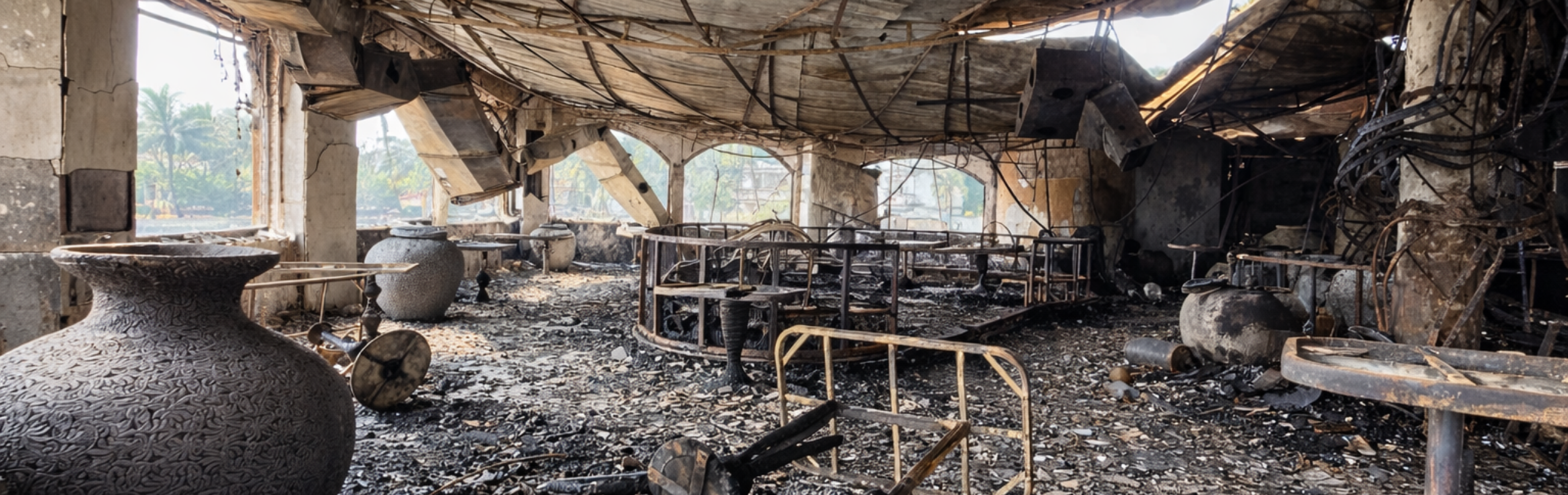
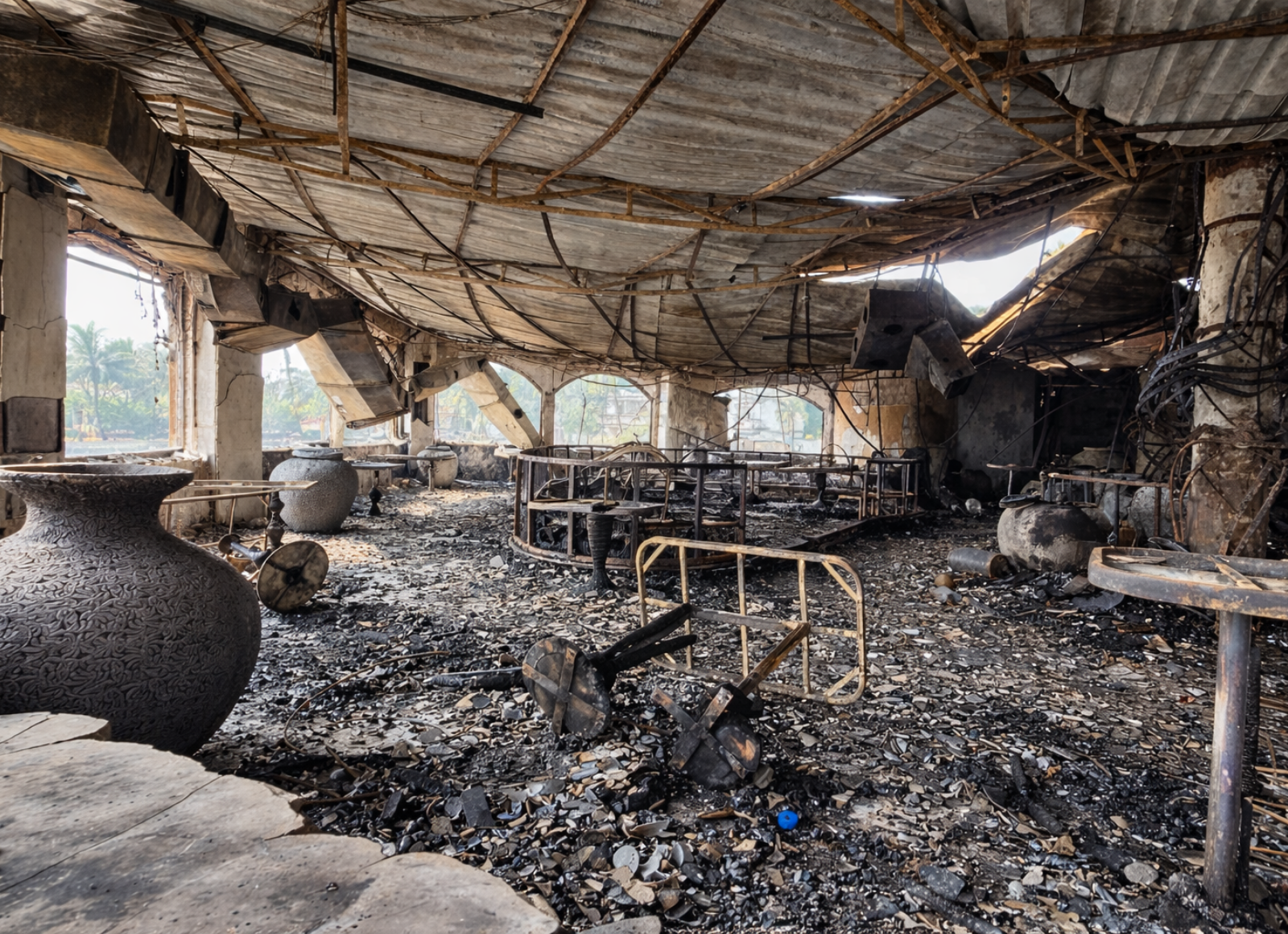
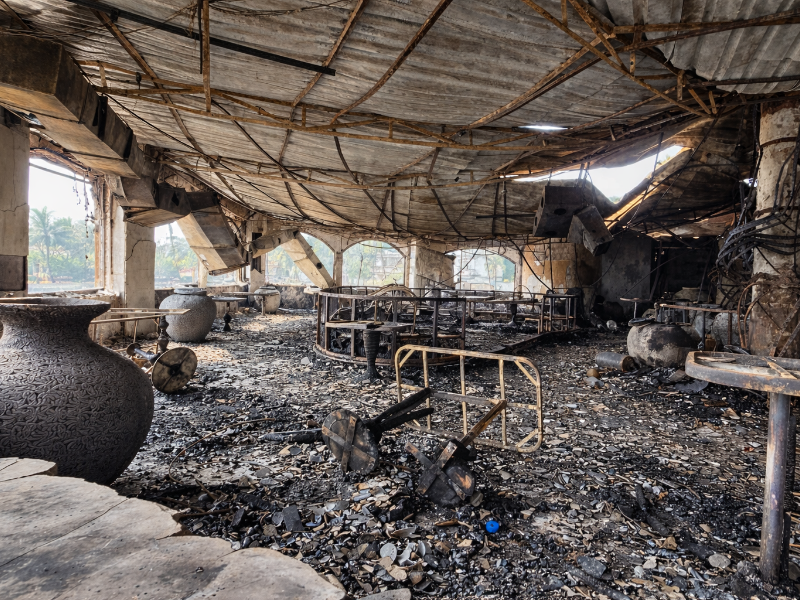
Police investigation reveals that sparks generated from pyro guns and crackers, inside the venue, ignited the flammable materials like palm leaves, fibres, plastics, foam packing on the ceiling, and decorative towers[2] placed on the dance area located on the first floor. The investigation further revealed that the nightclub did not obtain proper approval from the concerned authorities to use the pyro guns and fireworks on the dance floor, and there was an absence of adequate firefighting equipment within the premises.
The most important lapses noted during the police investigation were the absence of an emergency exit[3] on both the ground and first floors of the building. In addition, there were no proper signboards indicating the exit routes and no clear disaster response plan / emergency action plan. All these factors created a ripple effect, which led to panic and confusion among the crowd due to the lack of crowd safety management protocols. At one point, nearly 100 people from the first floor attempted to escape simultaneously, during which 25 people got trapped inside the kitchen and were unable to escape. Of those victims, 20 were staff members of the nightclub, while five were tourists.
Furthermore, the nightclub did not train its staff to handle fire accidents, and did not have a properly established “Standard Operating Procedure” (SOP) to handle emergencies. The Doctors of the Goa Medical College[4] state that many of the victims had died due to asphyxiation (deprivation of oxygen) or inhalation of toxic fumes. The absence of emergency exists and clear sign boards further prevented victims from escaping in time.
Risk Management Strategies to Prevent Fire Accidents
To prevent fire accidents inside buildings, organisations need to adopt robust fire
safety practices and embed effective enterprise risk management practices and compliance risk management techniques. The key steps involved in risk mitigation and prevention of fire accidents within buildings include the following:
Conducting Fire Risk Assessments
Organisations should regularly conduct fire risk assessments in their properties to detect potential fire hazards such as faulty electrical wiring and the presence of flammable materials. The assessments should evaluate both the likelihood and potential impact of fire incidents and identify the high-risk areas within the building.
Installing fire safety systems
Organisations should install essential fire safety systems such as smoke detectors, heat sensors, fire alarms, and clean agent fire suppression systems. These systems must be regularly inspected and maintained to ensure they remain in proper working condition and can respond effectively during fire-related emergencies.
Fire Safety Training for Employees
The Goa nightclub fire accident revealed that the places of entertainment are not providing adequate training to their employees to handle emergencies like fire accidents. Staff require comprehensive knowledge and understanding of risk management at entertainment venues. The organisations should train all their employees in identifying fire hazards and train them in fire safety practices. Regular training sessions should also be conducted to educate employees on the proper use of fire extinguishers and other firefighting equipment.
Development of Emergency Response Plan and Standard Operating Procedure
All organisations must develop a comprehensive Emergency Response Plan (ERP) to manage fire-related accidents. Emergency response planning should clearly identify evacuation routes, safe assembly points and contact details of local police and fire stations. Organisations should frame a Standard Operating Plan (SOPs) detailing the safe handling, storage and use of flammable materials, liquids, and gases to ensure effective disaster risk management.
Developing and Implementing a Fire Safety and Risk Management System
Organisations should track emergency risks and establish a fire safety management system to monitor the fire risk vulnerabilities, maintain detailed logs of fire safety equipment inspection and maintenance schedules, and develop a comprehensive enterprise risk management framework. This system should periodically assess the existing fire safety measures and strengthen them in accordance with evolving safety risks and regulatory requirements and standards to reduce regulatory risks.
Conclusion
The Indian Government has undertaken several initiatives to position our country as a vibrant, premier global tourist destination. However, the fire accident at the Birch by Romeo Lane nightclub in North Goa has posed a multitude of risks in India’s tourism industry – reputational risks, hospitality risks, tourism risks. Both the Central and State Governments should introduce proactive policies on preparedness in disaster management and governance risk strategies, and strengthen the existing laws to prevent accidents at tourist accommodations and destinations. Governments should strictly enforce and take stern action against violators. Through these measures aimed at promoting risk management at hospitality venues, India can build a strong reputation as a safe and secure destination for both domestic and international tourists.
The author of this blog is Naveen N, IRM Level 1 Certified.
References
- Chadha, P. S. (2025, December 16). Provisions remain dead letters in the statute books: High Court on killed Goa club fire. The Indian Express.
- The Hindu. (2025, December 7). 25 killed in Goa nightclub fire: Four arrested, three officials suspended as CM orders probe. The Hindu.
- British Safety Council India. (n.d.). Essential fire safety practices every high-risk workplace must implement. Britsafe.
- Press Information Bureau, Government of India. (2025, February 13). Initiatives taken by the Government to position India as a premier global tourist destination. Press Information Bureau.
FAQS
1.What were the fire safety lapses in the Goa tragedy?
The fire safety lapses in the Goa tragedy are as follows –
- Police investigation reveals that sparks generated from pyro guns and crackers, inside the venue, ignited the flammable materials like palm leaves, fibres, plastics, foam packing on the ceiling, and decorative towers placed on the dance area located on the first floor. The investigation further revealed that the nightclub did not obtain proper approval from the concerned authorities to use the pyro guns and fireworks on the dance floor, and there was an absence of adequate firefighting equipment within the premises.
- The absence of an emergency exit on both the ground and first floors of the building.
- The nightclub did not train its staff to handle fire accidents, and did not have a properly established “Standard Operating Procedure” (SOP) to handle emergencies.
2.How can regulatory failures increase disaster risk?
This fire accident in Goa highlights serious lapses in the building, which has been used as a nightclub, allegedly evading all necessary safety and security measures that need to be mandatorily followed by all places of entertainment in Goa. These failures have the potential to increase various disaster risks.
- The Goa night club’s licence to operate had expired. Without renewing the licence, the Night Club was permitted to continue their operations. Moreover, the local panchayat issued No-Objection Certificates (NOC) for electrical connection, water connection, and to carry out renovation at the property. This clearly indicates that the authorities were not vigilant in regulating the operation of the Romeo Lane nightclub.
- Police investigation reveals that sparks generated from pyro guns and crackers, inside the venue, ignited the flammable materials like palm leaves, fibres, plastics, foam packing on the ceiling, and decorative towers placed on the dance area located on the first floor. The investigation further revealed that the nightclub did not obtain proper approval from the concerned authorities to use the pyro guns and fireworks.
3.What is the role of Enterprise Risk Management in fire safety?
To prevent fire accidents inside buildings, organisations need to adopt robust fire
safety practices and embed effective enterprise risk management practices. The key steps involved in risk mitigation and prevention of fire accidents within buildings include the following:
- Organisations should regularly conduct fire risk assessments in their properties to detect potential fire hazards such as faulty electrical wiring and the presence of flammable materials. The assessments should evaluate both the likelihood and potential impact of fire incidents and identify the high-risk areas within the building.
- Organisations should install essential fire safety systems such as smoke detectors, heat sensors, fire alarms, and clean agent fire suppression systems. These systems can respond effectively during fire-related emergencies.
- The organisations should train all their employees in identifying fire hazards and train them in fire safety practices.
- All organisations must develop a comprehensive Emergency Response Plan (ERP) to manage fire-related accidents.
- Organisations should establish a fire safety management system to monitor the fire risk vulnerabilities. This system should periodically assess the existing fire safety measures and strengthen them in accordance with evolving safety requirements and regulatory standards.