

Introduction
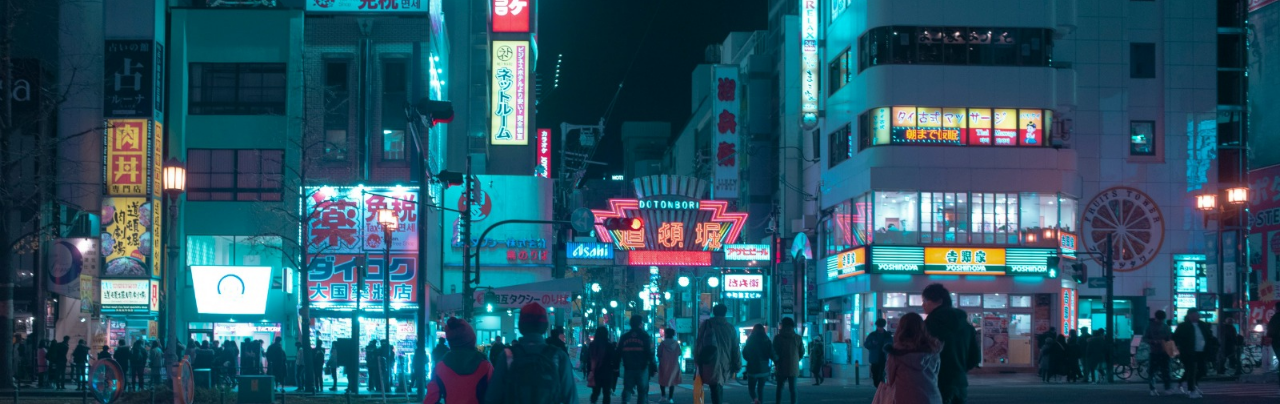
Across the world, urban life is steadily shifting from the rhythms of daylight to a more continuous, 24-hour pulse. The “second half” of the day — after sunset — is no longer reserved for rest. Instead, it is being reimagined as a time for work, culture, trade, community, and regeneration. In New York City, for instance, the night-time economy is estimated to generate over US$ 35 billion annually and support around 300,000 jobs. Driven by a rapidly expanding night-time tourism and broader night-time economy, this shift promises powerful gains: economic growth, inclusive employment, enhanced social interaction and cultural vibrancy. Yet, it also comes with challenges: from crime and safety concerns to environmental stress, inequality and governance gaps.
This article adopts a risk management lens to explore how cities can unlock the full potential of 24-hour economies. It examines the opportunities, the vulnerabilities, and the strategic choices necessary to build inclusive, safe, resilient, and sustainable cities that thrive day and night.
The Economic Upside
Unlocking New Value After Dark
The night-time economy is no longer a fringe benefit of urban nightlife — it has become a cornerstone of modern city planning. The consolidated value of 24-hour economies is projected to grow from roughly US$ 9.4 billion in 2024 to about US$ 24.8 billion by 2035.
Within this aggregate lies a fast-growing nocturnal tourism market. The global night tourism segment which is at approximately US$ 10.29 billion in 2025, is expected to reach about US$ 24.82 billion by 2035. This represents more than a doubling over a decade — a powerful signal that travel, leisure and cultural consumption at night are rapidly becoming mainstream.
Cities such as New York, London, Sydney, Tokyo, and many others are capitalizing on this shift. Night-time tourism revitalizes underutilized infrastructure, transforms stagnant zones, reenergizes public spaces, and breathes new life into local economies.
Jobs, Inclusion, and Economic Diversification
The benefits of a vibrant night economy extend well beyond glamor and nightlife. Critical services — healthcare, logistics, transportation, sanitation, maintenance — often rely on overnight or off-peak work. As the night-time economy grows, so does the demand for workers in these essential yet historically undervalued roles.
For example, in the United Kingdom, as of recent years, approximately one in nine people work as part of the night-time economy. By broadening what we consider the “night economy,” from nightlife to critical urban services, cities can create more equitable employment opportunities — particularly for lower-income workers, migrants, shift-based staff, and service-sector labourers who rely on availability beyond conventional daytime hours.
Moreover, a robust 24-hour economy promotes diversification, making urban economies less dependent on a narrow set of daytime industries. As the global night-time economy grows, it opens up new markets — cultural tourism, late-night retail, transport and mobility services, logistics, maintenance and cleaning, 24/7 care services — broadening the economic base cities can draw upon.
In sum, the economic rationale for 24-hour cities is strong. But only if cities plan carefully — integrating risk identification, governance, infrastructure, and inclusion as core principles.
Urban Planning: Designing for the Night
Rethinking Infrastructure and Urban Design
Creating a 24-hour city requires more than extending business hours. It demands a rethinking of the city’s physical and social infrastructure — from public transit and lighting to public spaces, zoning and social services. When done well, such planning makes the city more accessible to a wider cross-section of residents and visitors — especially those who depend on public transport or who cannot afford private mobility.
A recent report focusing on night-time economies shows encouraging trends: 97% of cities surveyed now support the night-time economy, and 59% have adopted an explicit night-time economy strategy.
Such strategies often include:
- Extended or 24/7 public transportation, ensuring that night-time workers, tourists, or residents aren’t stranded.
- Public spaces — parks, plazas, pedestrian zones — kept safe, accessible and active after dark; not just commercial areas, but residential neighborhoods too.
- Equitable access to cultural and leisure amenities — not only high-end nightlife, but night markets, public events, open-air concerts, family-friendly festivals, and cultural performances. Such inclusive programming helps ensure the night-time economy benefits all segments of society, not just affluent or tourist populations.
These investments — in transport, lighting, public space, zoning — serve a dual purpose: supporting economic activity at night and embedding inclusivity and social equity into the urban fabric.
Culture, Creativity, and Community Equity
A 24-hour city acknowledges that cultural life doesn’t end when the sun sets. In fact, night-time can become a powerful canvas for expression — music, art, performance, public festivals, community events. According to the latest edition of the World Cities Culture Report, culture remains central to the recovery and innovation of global cities. The report highlights how many cities are actively protecting creative workspaces, supporting youth and community-led cultural events, and integrating climate and cultural policy.
Crucially, inclusive night-time strategies aim to democratize access to culture and leisure. Rather than catering solely to affluent tourists or club-goers, many cities are designing night-time markets, night-festivals, art installations, food bazaars, and family-friendly events that welcome a broader public. In this way, the night becomes a shared civic resource — not a privilege of a few.
By prioritizing grassroots creativity and cultural equity, cities can guard against displacement, gentrification, or cultural risks like narrowing of cultural opportunities — ensuring that the benefits of night-time economies reach long-term residents, artists, informal workers, and low-income communities alike.
Rethinking Night-Time Safety
Beyond Policing
Traditional responses to night-time risks have often focused on increasing police presence. But many cities are showing that safer nights can arise from design, community engagement, and governance innovation — not just enforcement. As highlighted by the World Economic Forum’s analysis of myths surrounding 24-hour economies, safety doesn’t always require more policing: well-designed lighting, active public spaces, crowd management, and community mediators can achieve significant results.
For instance, in some European cities, “host” programs and community mediators — rather than police — help manage nightlife districts. These mediators de-escalate conflict, manage noise, and provide guidance to pedestrians and visitors, reducing nuisance complaints and alcohol-related incidents.
Beyond that, infrastructure plays a key role: safe, well-lit streets; clear signage; accessible transit and mobility options; multiple exits for public venues; and public spaces that remain active and monitored at night. Together, these elements make night-time spaces safer — especially for vulnerable groups, such as women, older adults, shift workers and low-income residents.
Health, Public Services, and Night-Time Externalities
A thriving night economy also brings public health and environmental externalities: increased demand for sanitation, waste collection, ambulance and emergency services, noise control, and pollution management. Late-night youth gatherings, nightlife, and high footfall in entertainment hubs can strain local services.
To manage such risks, cities need to embed 24/7 public service capacity — from emergency medical care to sanitation, waste disposal, lighting maintenance, and clean public restrooms. They also need to manage noise, regulate alcohol and crowd density, and ensure residential neighbourhoods are protected from nightlife externalities.
Without these measures, the night-time economy’s gains can be offset by public health issues, resident discontent, and long-term environmental stress. Effective risk management demands proactive, not reactive, planning.
Night-Time Offices and Coordinated Policy
A recurring challenge in developing 24-hour cities is institutional fragmentation. Responsibilities for safety, transport, licensing, sanitation, cultural programming and business regulation typically lie with different departments — which may not coordinate effectively. To bridge this gap and prevent governance risk, many cities have created night-time governance roles: night mayors, 24-hour economy commissioners, or cross-department night-time offices. These bodies oversee and coordinate the different strands of night-time policy — from licensing venues to ensuring transport, safety, and cultural activation.
In cities with such coordination, the benefits are clear: streamlined permitting and licensing for nightlife businesses, better communication with communities, data-driven regulation, and a unified strategy for balancing economic growth, safety, and social equity.
For example, in the case study of New York’s city-level night-time governance, the local night-time office replaced an outdated “law-enforcement only” approach with a more holistic model: coordinating agencies, mediating conflicts, offering mental-health and harm-reduction support, and serving as a liaison between nightlife businesses and the community.
This kind of governance model transforms the night-time economy from a patchwork of commercial licenses into a managed, integrated part of urban life — one that balances economic vitality with social responsibility.
Future-Proofing Night-Time Cities
Economic and Social Resilience
Economic diversification is a key pillar of resilience. Cities that rely exclusively on daytime commerce — offices, daytime retail, traditional tourism — face vulnerabilities: economic downturns, seasonal slumps, changing work patterns. A well-developed night-time economy can act as a buffer, smoothing out demand, sustaining jobs, and keeping urban infrastructure utilized around the clock.
Night-time sectors—ranging from entertainment districts to logistics hubs—face highly variable demand patterns, heightened liability risks, and insurance gaps not typically seen in daytime operations. Risk pooling mechanisms, similar to catastrophe insurance models, allow small businesses—night markets, independent music venues, late-night retailers—to access coverage previously priced out of reach. Municipal governments can adopt fiscal resilience strategies: dynamic licensing fees linked to risk profiles, tiered tax models encouraging sustainable operations after dark, and contingency funds earmarked for night-time emergencies, including extreme weather events or mass-scale service disruptions. Such approaches help balance economic opportunity with financial stability, ensuring that the night-time economy is not only lucrative but also shock-resistant.
As night-time economies become more varied — beyond nightlife to essential services, creative economy, care economy, and logistics — the resilience dividend increases. Moreover, social resilience improves when cities offer equitable access to services, amenities and employment, regardless of time of day. By embedding inclusivity — in transport, public space, culture — 24-hour cities can become more socially cohesive, reducing social risks and inequalities tied to shift work, informal labour, or marginalization.
Environmental Sustainability and Climate Adaptation
Running a city around the clock inevitably increases resource consumption — energy for lighting, heating/cooling, transport; waste generation; noise; carbon emissions. Without sustainable planning, the environmental footprint of night-time economies can outweigh their benefits.
Recognizing this, many forward-looking cities are integrating climate-conscious strategies into night-time policy. According to the World Cities Culture Forum’s global survey, 88% of cities with cultural policies are now linking culture and climate action — seeing night-time economies as an opportunity to integrate sustainability into urban life.
Practical steps include:
- Energy-efficient lighting (LEDs, sensor-based lighting, solar power) for streets and public spaces.
- Promoting public transit, cycling, shared mobility over individual car use — reducing carbon emissions and traffic congestion.
- Waste management, recycling, sanitation services tailored for night-time demand, preventing littering and pollution around nightlife hubs.
- Zoning and land-use policies that balance nightlife zones with residential neighborhoods, limiting noise, light pollution, and preserving the quality of life for residents.
Such measures help ensure that 24-hour cities remain livable — not just economically vibrant — and that the environmental and social costs of round-the-clock activity are managed responsibly.
A New Governance Architecture for the Night
Emerging 24-hour cities are discovering that daytime-centric regulations rarely translate to effective night-time governance. Issues such as noise management, transportation scheduling, safety compliance, alcohol service, and crowd dynamics behave differently after dark, requiring regulatory systems that are both flexible and risk-sensitive.
Cities can pilot adaptive licensing frameworks that adjust operating permissions based on real-time risk assessments. These include dynamic closing hours during extreme weather, variable crowd limits informed by footfall analytics, and performance-based licensing that rewards safety compliance with extended operating privileges. Additionally, there is increasing momentum behind interdisciplinary regulatory councils—bringing together transport authorities, cultural agencies, emergency services, labour departments, and environmental regulators.
Worker Safety, Labour Protections, and Ethical Night-Time Employment
Evidence from global labour organizations indicates elevated risks of fatigue, reduced access to healthcare, limited mobility options, and greater exposure to harassment and violence during night shifts.
Forward-looking cities can address these challenges through:
- Protected mobility corridors for late-night workers, supported by affordable transit and real-time safety monitoring.
- Mandatory rest and recovery standards, specifically designed for night-shift patterns, reducing fatigue-related incidents.
- Certification programmes for employers operating primarily at night, ensuring compliance with fair-wage policies, mental health support, and shift-rotation safeguards.
- Night-time worker resource centres offering legal support, health services, and safe waiting areas connected to night transit nodes.
These interventions protect the backbone of the night-time economy—workers—while strengthening the ecosystem’s long-term resilience.
Emergency Preparedness
Unlike daytime emergencies, night events often face compounded vulnerabilities: limited visibility, reduced public transit capacity, intoxication-related incidents, and stretched emergency services.
Cities building 24-hour economies can adopt night-specific emergency preparedness systems:
- Night-time simulation models predicting evacuation flows, crowd behaviour, and infrastructure stress under low-light conditions.
- Integrated command centres coordinating law enforcement, health services, transit, utilities, and cultural stakeholders during large events.
- Night-resilient infrastructure, such as illuminated evacuation paths, emergency shelters open 24/7, night-ready medical triage zones, and communication systems tailored to noisy entertainment districts.
- Public alert systems using geofenced messaging to inform attendees of delays, hazards, or service changes.
These strategies reduce response times and can prevent high-casualty incidents often associated with overcrowded night-time environments.
Tourism Risk Management
The global surge in night-time tourism brings both opportunity and the vulnerability of night tourism risks. Cities dependent on after-dark tourism must manage reputational risks: safety incidents, pollution, unregulated operators, and overcrowding can swiftly damage a city’s global image.
To protect long-term tourism stability, cities can implement:
- Night-time visitor management plans that distribute activity across districts, reducing overcrowding in iconic hotspots.
- Certification schemes for tourist-facing businesses, ensuring quality, safety, and accessibility standards.
- Data-driven crowd forecasting, similar to airport congestion models, guiding tourists toward less crowded routes or venues.
- Transparent incident reporting frameworks to improve accountability and protect the city’s reputation.
International Benchmarking
As more cities formalize night-time governance, a global ecosystem of shared learning is emerging. Networks such as the World Cities Culture Forum, Night Time Economy Commissions, and the Global Experience Alliance encourage benchmarking across cities—helping administrations avoid repeating costly mistakes.
Key practices include:
- Comparative audits assessing how safety, inclusivity, culture, and economic value differ across global night-time hubs.
- Pilot exchanges, where cities test small-scale interventions—such as night markets, mobility hubs, or digital ticketing systems—before scaling them.
- Shared training programs for night managers, urban planners, and emergency personnel.
- Regional night-time clusters that coordinate tourism promotion, transportation networks, and cultural programming across multiple cities.
Through cross-border collaboration, cities can accelerate their learning curve and build globally competitive 24-hour economies grounded in resilience and shared expertise.
Why the Future of Emerging and Rapidly Urbanizing Cities Depends on Thoughtful Night-Time Economy Planning
While much of the current night-time economy research and policy originates from established global cities — New York, London, Sydney, Amsterdam, Tokyo — the relevance for emerging and rapidly urbanizing cities is profound. For governments and urban planners in Asia, Africa, Latin America, and the Global South, the opportunity is twofold: to leapfrog traditional development models and to embed equity, inclusivity, safety and sustainability into the foundations of 24-hour urban life.
Consider the following:
- Rapid urbanization in many emerging economies often leads to high population densities, informal labor, infrastructure risks, and under-served night-time workers. A 24-hour city approach, if planned carefully, can provide stable employment, better access to services, and safer public environments.
- As these cities grow, transport and mobility remain critical challenges. Planning for 24/7 transit, safe pedestrian pathways, and mixed-use zones can reduce reliance on cars, ease congestion and lower pollution.
- Environmental stress — heat, waste, pollution — is often worse in rapidly urbanizing cities. By integrating sustainable infrastructure (energy-efficient lighting, waste systems, public transit) from the start, night-time economies can avoid aggravating environmental burdens.
- Social inequity — housing, affordability, access to amenities — tends to worsen as neighborhoods gentrify. Inclusive night-time policies can help protect affordable housing, support grassroots cultural expression, and ensure benefits reach marginalized communities.
In short, for emerging cities, the night-time economy offers an opportunity to design the future of urban living — not just replicate models from established metropolises, but shape more equitable, resilient, and sustainable cities that work for all hours and all people.
Conclusion
The rise of the 24-hour economy, particularly in the context of night-time tourism, is reshaping how cities operate. While the opportunities for economic growth are clear, they must be balanced with thoughtful urban risk management strategies. By focusing on inclusivity, safety, and resilience, cities can build environments that capitalize on the night-time economy’s potential while safeguarding the well-being of all citizens and visitors. In the coming decades, the cities that succeed will be those that innovate responsibly and embrace the full potential of the 24-hour world.
FAQS
1.What is a night-time economy or 24-hour city?
A night-time economy refers to economic and social activities occurring primarily between 6pm and 6am, encompassing entertainment, hospitality, culture, transportation, security, and related services like late-night retail or emergency facilities.
A 24-hour city extends this concept by promoting extended business hours for shops, cafes, and co-working spaces; reliable night-time public transport; and safe, well-lit public areas to accommodate diverse schedules. They foster creativity through nightlife venues that host subcultures, music events, and networking opportunities.
The night-time economy generates substantial revenue—over one billion euros annually in cities like Berlin—and employs a significant workforce, such as 1 in 9 people in the UK. It boosts tourism, attracts skilled workers, and enhances city attractiveness for companies. Over 80 cities worldwide now appoint night mayors to manage these vibrant, safe nighttime operations.
2. What are the benefits of a night-time economy?
Travel, leisure and cultural consumption at night are rapidly becoming mainstream.
Night-time tourism revitalizes underutilized infrastructure, transforms stagnant zones, reenergizes public spaces, and breathes new life into local economies.
A 24-hour economy promotes diversification, making urban economies less dependent on a narrow set of daytime industries. As the global night-time economy grows, it opens up new markets — cultural tourism, late-night retail, transport and mobility services, logistics, maintenance and cleaning, 24/7 care services — broadening the economic base cities can draw upon. As the night-time economy grows, so does the demand for workers in essential yet historically undervalued critical services.
Night-time can become a powerful canvas for expression — music, art, performance, public festivals, community events.
3. What are the risks/challenges associated with night-time tourism?
Night-time tourism demands a rethinking of public transit, lighting, public spaces, zoning and social services. Inclusive programming helps ensure the night-time economy benefits all segments of society, not just affluent or tourist populations.
Challenges include conflict, noise pollution, pedestrians and visitor safety, nuisance complaints and alcohol-related incidents. Well-designed lighting, active public spaces, crowd management, and community mediators can achieve significant results.
A recurring challenge in developing 24-hour cities is institutional fragmentation. Night-time governance roles are necessary to oversee and coordinate the different strands of night-time policy — from licensing venues to ensuring transport, safety, and cultural activation.
A night economy also brings public health and environmental externalities: increased demand for sanitation, waste collection, ambulance and emergency services, noise control, and pollution management.
Effective risk management demands proactive, not reactive, planning.